Most San Diego residents who use their green bin have no idea what happens next.
The green bin goes out, the truck comes, and that's the end of the story as far as most households are concerned. But the story doesn't actually end at the curb. It continues at Miramar Greenery, where your food scraps and yard trimmings are processed into finished compost — and then offered back to you, for free, as a genuine soil amendment you can use in your garden.
This is the loop that most people don't know they're already part of. This post explains how it works, why it matters, and exactly how to pick up your share of what your own household helped create.
What Happens at Miramar Greenery
The Miramar Greenery composting facility sits on the same site as the Miramar Landfill in Mira Mesa. Every week, organic waste collected from San Diego households — food scraps, yard trimmings, food-soiled paper — arrives by the truckload and enters the composting process.
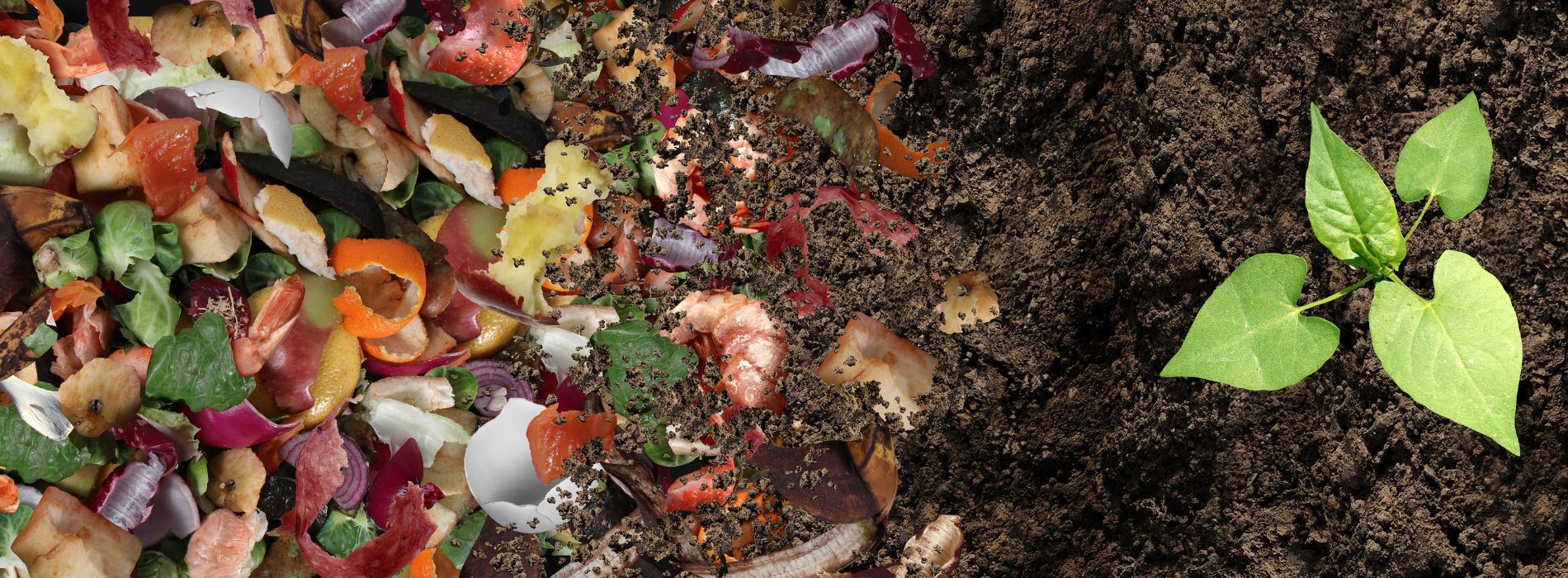
Compost is made by processing organic materials such as yard trimmings, food scraps, and food-soiled paper. At the Miramar Greenery, the City processes organic waste by adding air and water to help microorganisms break down the material. Those microorganisms release energy as high heat, significantly reducing pathogens, weed seeds, pesticides, and herbicides in the finished compost.
The result is a clean, nutrient-rich finished compost — not the same thing as raw food waste. Finished compost looks and smells like dark, rich soil. If you want a deeper look at what happens between your curb and that finished product, we covered the full journey in What Happens to Your Compost After Pickup.
And the City gives it away.
The Alternative: Landfill and Methane
Understanding why this matters requires a quick comparison to what happens when food scraps go in the black bin instead.
Organic waste in a landfill decomposes without oxygen — a process called anaerobic decomposition that produces methane, a greenhouse gas roughly 84 times more potent than carbon dioxide over a 20-year period. According to the Environmental Protection Agency, organic waste accounts for a significant portion of California's waste stream. Left to decompose in landfills, the organic waste releases methane and contributes to climate change, and also emits fine particulate matter that contributes to health conditions like asthma.
When that same organic waste goes in the green bin instead, the outcome is completely different. Instead of becoming methane in a landfill, it becomes a climate-change-fighting soil amendment. The carbon that would have entered the atmosphere is instead absorbed into finished compost and then into the soil where it's applied.
This is why California passed SB 1383 requiring residents to divert food scraps from landfills. To understand exactly what that law requires of San Diego residents, California's Composting Crackdown covers the enforcement details.
What Free Compost Actually Does for Your Garden
If you've never used compost, the benefits go well beyond what most people expect from a soil additive.
Compost adds life to the soil by increasing soil organisms that help plants grow strong and access the water and air they need. It reduces erosion by binding and stabilizing soil. It recycles nutrients, making it easier for plants to get what they need. And it saves water by helping soil hold more moisture and drain better — so plants handle drier conditions and require less frequent watering.
That last point is particularly relevant in San Diego, where water conservation is a year-round concern. Compost-amended soil can hold significantly more moisture than untreated soil, which means less irrigation and healthier plants through dry stretches. Compost also reduces the need for chemical fertilizers, herbicides, and pesticides — saving money and reducing runoff into San Diego's waterways.
How to Use It Once You Have It
Compost is most beneficial when used consistently — apply it at least twice a year, in spring and fall.
- Raised beds and pots: Mix 1 part compost with 4 parts soil media such as sand, perlite, and potting mix.
- Bushes and trees: Top dress with 1 to 2 inches of compost and water it in. Don't apply directly to the base or trunk.
- Lawn: Apply up to ¼ inch of compost over grass and water it in.
- Seedlings and propagation: Mix 1 part compost with 6 parts soil media.
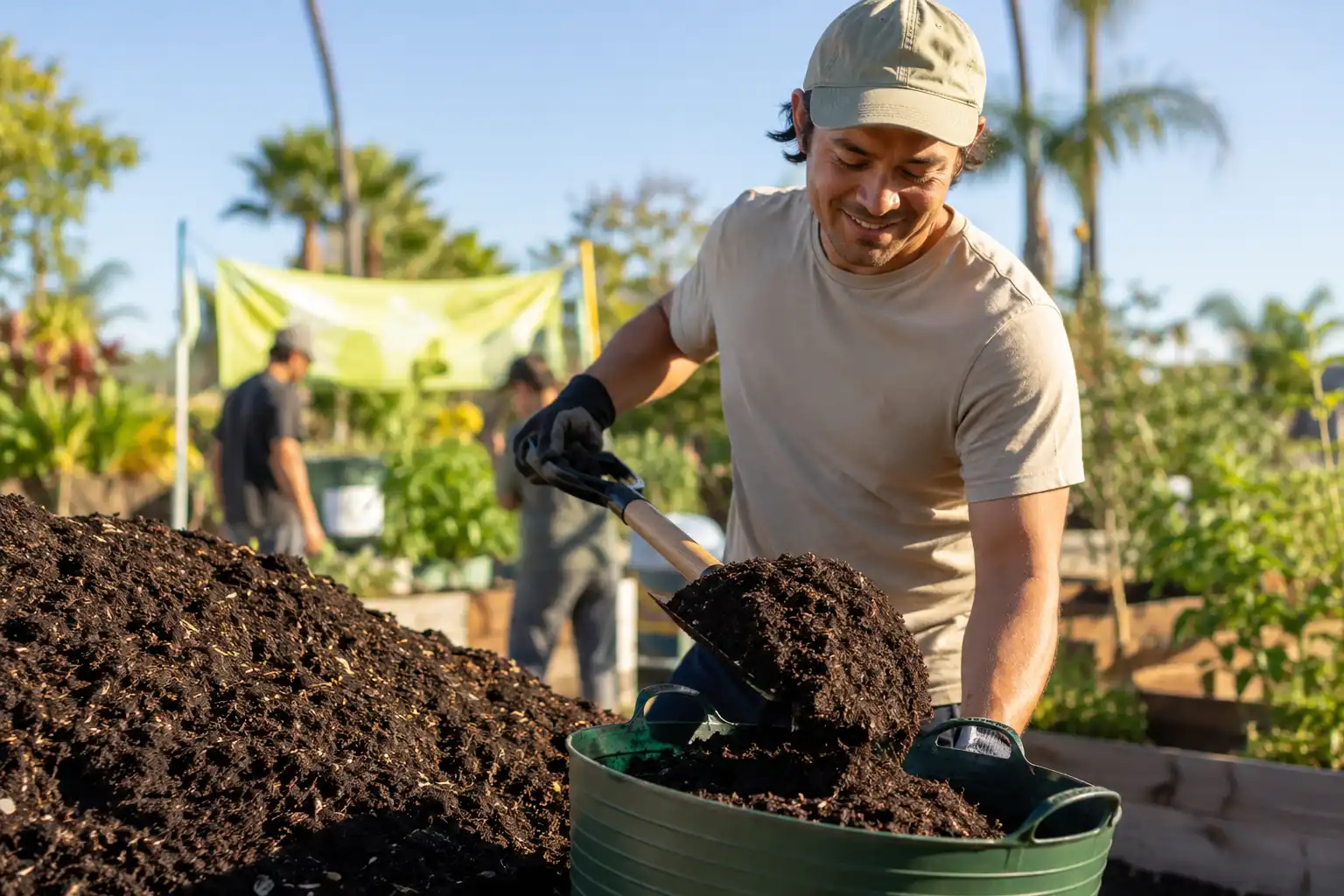
City of San Diego residents may self-load up to 2 cubic yards of compost and mulch from the Miramar Greenery for free with proof of residency — that's roughly two bathtubs full of material. A single pickup gives you enough to meaningfully improve multiple garden beds, enrich your lawn, and top dress established plants.
For a complete guide on what's accepted in your green bin, see How to Know What You Can Compost.
Where and When to Pick It Up
There are two ways to get your free compost.
Ongoing pickup at Miramar Greenery: You can pick up compost directly from the facility during normal business hours with proof of San Diego residency. No event required, no registration. The address is 5165 Convoy Street, San Diego, CA 92111.
City compost giveaway events: The City of San Diego and I Love A Clean San Diego partner to host free Compost and Mulch Giveaway Events at neighborhood locations throughout the year. Here are the upcoming events for 2026:
- July 12 (Sunday), 10am–2pm — Liberty Station
- July 25 (Saturday), 8am–12pm — Sun Runner Lot
- August 22 (Saturday), 8am–12pm — Chollas Lake Park, Gloria's Mesa
- October 3 (Saturday), 8am–12pm — Sun Runner Lot
- October 31 (Saturday), 8am–12pm — Los Peñasquitos Ranch House (themed "Boo to Bloom")
- November 14 (Saturday), 8am–12pm — Sun Runner Lot
Registration is available on Eventbrite for each event. Check the City of San Diego's composting events page for the most current schedule.
The Part EcoToss Plays in All of This
The compost you pick up at Liberty Station or Miramar Greenery is only as good as the organic waste that went into making it. And this is where most San Diegans unknowingly create a problem — by using the wrong bag.
Bioplastic bags jam the machinery. Miramar Greenery's composting process relies on industrial grinders and screening equipment to break organic material down at scale. Plastic and bioplastic bags — even those marked as "compostable" — don't break down on the facility's processing timeline. Instead, they wrap around and jam grinding equipment, causing costly downtime and mechanical wear. San Diego's Environmental Services Department has specifically identified plastic and bioplastic bag contamination as one of the most persistent operational challenges at the facility. For a detailed look at why this happens, see our post on why bioplastic bags are making things worse.
Bioplastic bags leave microplastics in the compost — and in your food. When bioplastic bags do pass through the grinding process, they don't disappear — they shred into thousands of microscopic plastic fragments that become embedded in the finished compost. That finished compost is then given away to San Diego residents and used in home gardens. When applied to soil where tomatoes, herbs, peppers, leafy greens, or any other edible plant is growing, those microplastic particles can be absorbed directly through the plant's root system and work their way into the fruit, leaves, and stems you eventually eat. The free compost you pick up from a giveaway event could carry microplastics from your neighbor's "compostable" bag straight to your dinner table. For the full picture, see The Hidden Problem with Bioplastic Bags in Food Waste Recycling.
Paper is the only liner that closes the loop cleanly. An EcoToss paper food waste bag contains your scraps, absorbs moisture, and drops directly into the green bin — bag and all. Because it's 100% paper with no plastic lining or coating, it composts cleanly at Miramar Greenery alongside the food scraps inside it. No machinery jams, no microplastic residue, no contamination in the finished compost. If you've been struggling with mess or odor from an unlined pail, 5 Easy Ways to Reduce the Mess from Food Waste Collection covers the full setup.
The loop goes: your kitchen scraps → EcoToss paper bag → green bin → Miramar Greenery → clean finished compost → free pickup → back to your garden. Every step depends on the step before it. The bag in your kitchen pail is step one.
You're Already Part of This
If you use your green bin, you're already contributing to San Diego's compost supply. The only question is whether you're getting your share back.
Most San Diegans who diligently sort their food scraps have never made the trip to pick up the finished compost their household helped create. The free pickup program at Miramar Greenery has existed for years and remains genuinely underutilized.
The next giveaway event is July 12 at Liberty Station. Bring a container, bring proof of San Diego residency, and bring home a piece of what your kitchen helped make.
Frequently Asked Questions
Is free compost available in San Diego?
Yes. City of San Diego residents can pick up free compost at Miramar Greenery (5165 Convoy Street) during normal business hours with proof of residency, and at free Compost and Mulch Giveaway Events hosted throughout the year at neighborhood locations including Liberty Station, Chollas Lake Park, and Sun Runner Lot.
How much free compost can San Diego residents pick up?
Residents may self-load up to 2 cubic yards of compost — approximately two bathtubs full — for free per visit at Miramar Greenery, with proof of San Diego residency.
What is Miramar Greenery?
Miramar Greenery is the City of San Diego's composting facility located in Mira Mesa at 5165 Convoy Street. It processes food scraps, yard trimmings, and food-soiled paper from residents' green bins into finished compost, available at no cost to San Diego residents.
Can you use compostable bags in San Diego's green bin?
No. The City of San Diego prohibits plastic bags of any kind in the green bin, including bags labeled "compostable" or "biodegradable." These bags jam composting equipment and leave microplastic fragments in the finished compost. Only 100% paper bags with no plastic lining are accepted.
When is the next free compost giveaway event in San Diego?
The next Compost and Mulch Giveaway Event is July 12, 2026 (Sunday) from 10am to 2pm at Liberty Station. Subsequent events run through November — check the City's composting events page for current dates.
Why do bioplastic bags cause problems at San Diego's composting facility?
Bioplastic bags don't break down on Miramar Greenery's processing timeline. They jam grinding and screening equipment and shred into microplastic fragments that end up embedded in finished compost — which can then be absorbed by plants and enter the food supply.
What is the best bag to use in a San Diego kitchen compost pail?
A 100% paper bag with no plastic coating or lining — such as an EcoToss food waste bag. Paper absorbs moisture, reduces odor and pests, composts cleanly at Miramar Greenery, and is the only liner type accepted in San Diego's green bin program.
EcoToss bags are 100% paper — no plastic, no lining, no coating. They keep your kitchen pail clean and close the composting loop the right way.